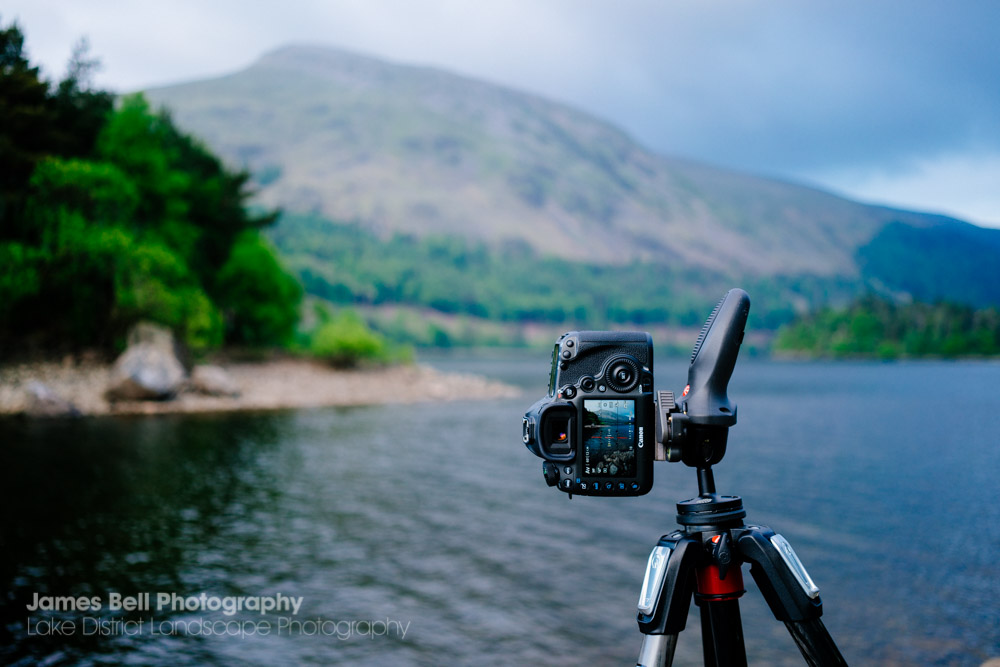
After a 7 month wait I finally received my new Landscape Photography Camera the Canon 5DS R. A 50 megapixel digital SLR camera and one squarely aimed at Landscape and Studio Photographers.
My previous camera, the Canon 5D Mk3 had 22 Million Pixels and I was comfortably able to produce prints 75cm wide on fine art paper for framing and 3m wide on canvas.
I also have a new camera from Sony the Sony A7Rii which unlike the Canon is much smaller and lighter. There has been much debate online which camera is the best and which one produced the best images. At 42 million pixels the Sony is again a huge megapixel camera and offers several benefits over the Canon 5DS R. I’ve previously owned a Sony RX100M3 and a A6000. Both of which were excellent cameras. I was keen to see how they both performed.
Typically I use my Canon DSLR locked down on my tripod and I prefer to use a manual focus 24mm Tilt and Shift lens for most of my Landscape shoots. However I do think there can be opportunities missed using a Tripod. Locking the camera down is a sure fire way to capture really sharp images that I need for producing high quality prints. However I enjoy the freedom of photography with a smaller and more portable camera. So whilst the Canon was attached to my Tripod, I used the Sony handheld. The Sony has a higher range of Light Sensitivity (ISO) than the Canon, it also has image stabilisation built into the camera body which should help with the handheld shots.
A visit to Hodge Close

The dynamic range of the 5DS R really impressed me with this shot above, I’m sure it performs better than my Canon 5D Mk3 in terms of Dynamic range. Below are some 100% crops.

The detail captured within these images is excellent and will transfer beautifully into large prints.

I was happy how the camera held onto the highlights around The Langdale Pikes in the distance.
This shot below was taken on the 5DS R and is a combination of 3 exposures to enable me to retain the detail in the sky as well as the detail within the giant cave.

I almost got away with one shot of the same scene with the Sony which has the ability to capture a wider Dynamic Range than the Canon, had I have captured the scene a half stop darker I’d of retained the sky and the Sony files seem really flexible when it comes to lifting the darker areas of the image. I’ll maybe do more tests around this, but for sure the Sony seems to have more flexibility in terms of Dynamic Range. Taking one shot instead of 3, not using filters perhaps. Carry less equipment and speed up the process maybe.
The image below is from the 5DS R again.

Below is a 100% crop inside the image above.

Very impressive with the detail captured within these shots from the 5DS R. They’ll make very detailed prints.
A visit to Grasmere

Penny Rock Woods approaching Grasmere. Shot on the Sony as the Canon was still in my bag. Testament to the lightweight package offered by Sony, no rucksack required….

Lewis running ahead, he’s as keen as I am.

A Handheld shot over Grasmere taken with the Sony with a 100% crop below showing the detail from the 42mp Sony A7Rii. Quite often my prints have hidden details within them that you don’t always see at first glances.

A crop from the image above clearly shows a Lady swimming in Grasmere.

One of the massive advantages to me with these high resolution cameras is the ability to crop one image and still be left with lots of information. This Panoramic image above was taken handheld with the Sony A7Rii and cropped. There is still a lot of detail within this image. I’d be confident printing this as large as you’d ever want a print to be in your home. Easily 200cm wide.
Meanwhile the Canon 5DS R was setup with my 24mm Tilt Shift lens, a polarising filter to help eliminate reflection on Grasmere and a graduated neutral density filter to bring the brightness of the sky more inline with the foreground enabling the camera to capture the full dynamic range of the scene.

Below is a 100% crop of the image above.


The Canon 5DS R with 24mm Tilt Shift Lens.
I tend to favour Portrait shots with the Tilt Shift Lens. The ability to shift the lens down which retains the perspective of distant objects in the scene is a real benefit. Quite often I see wide angle shots where trees and buildings within the scene are distorted and no longer vertical. A tilt shift lens eliminates this. Worth the investment for a wide angle Landscape Photographer.
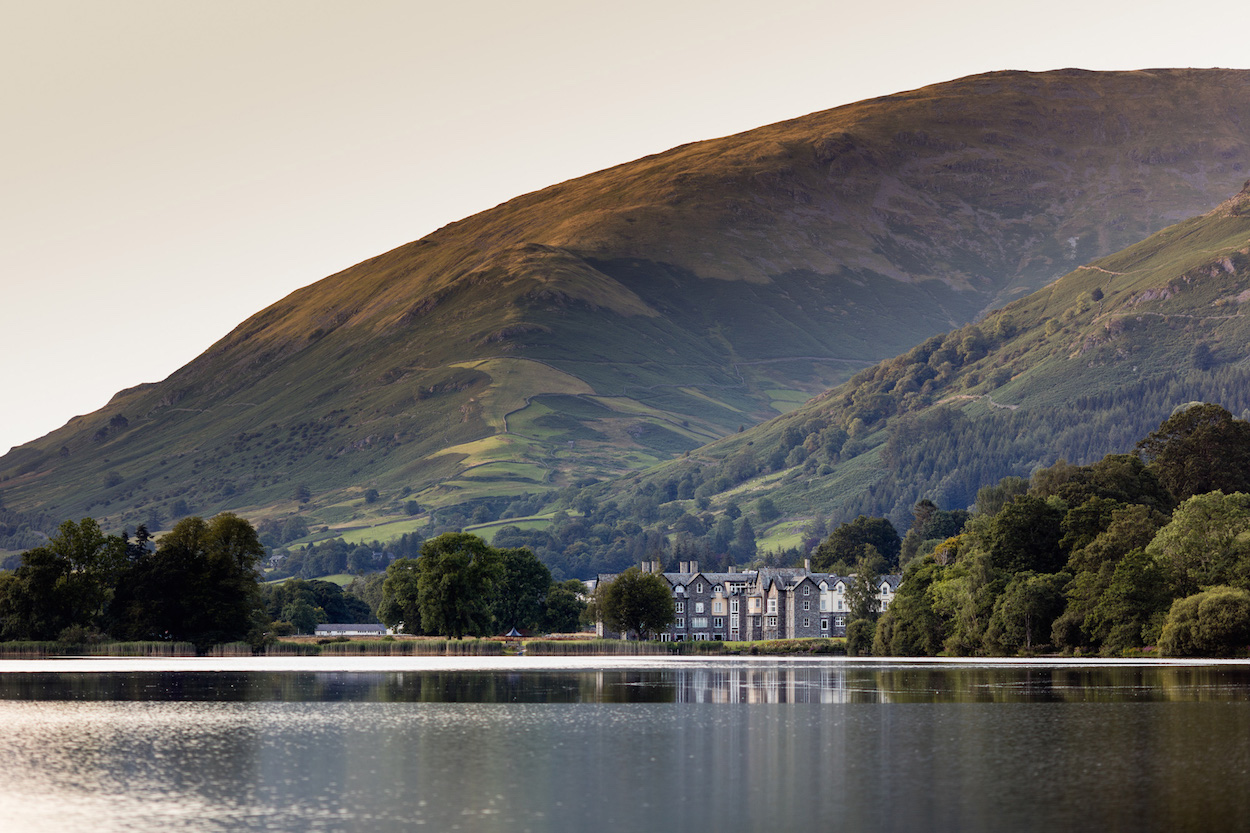
A Handheld shot with the Canon 135mm F2 Lens

Looking at the image full size, even at F2 the level of detail captured with the Canon 5DS R is outstanding.

Thomas with the Sony A7Rii and a Sony Zeiss 24-70 F4 Lens. He’s since had a haircut… Shot on the 5DS R at 135mm F2.
So what’s the Verdict…
While I was researching these two cameras, I really struggled to make a decision with regards which one is best. You can read all the reviews, watch all the YouTube videos you like but I won’t ever reach a decision without trying them for myself. I agonised for ages over these two and ultimately decided to stop the process by buying both. For me they both have unique abilities that I will fully use, together and independently.
The Canon works with my collection of high quality lenses I’ve built up over a decade. It’s a known system to me and one I could operate with my eyes shut. I think the 5D range of Canon bodies are ergonomically perfect. They have been tweaked for several iterations and I haven’t held a more comfortable camera.
Before I knew about the Sony I said I was going to only shoot the 5DS R at Low ISO to get the very best image quality, I’d only use it on a tripod and I’d use my manual focus Tilt Shift Lens. Using this lens and the tripod slows the entire process down. You have to really think about the composition and setting up the shot. I like this element of Landscape Photography. It’s technical to some degree. You’re not just making a snapshot, you’re composing a scene. I find slowing the process down helps me to create better images.
The Sony on the other hand almost seems too light and small to bother with a tripod. I’m sure I will use it that way some day but probably for video. The Sony will come with me to Landscape Shoots and I’ll likely take more shots with it. It’s easily transportable as an everyday camera. I view it more as a consumer camera than a professional tool like the Canon, maybe that is unfair, but it doesn’t feel as solid as the Canon.
Highlights of the A7Rii for me are, the 4K video, tiltable LCD, focus peaking, higher ISO and in body stabilisation. Initially I thought the ability to use Canon Lenses via a third party adapter (I have the Commlite adapter) would be good, but in practice it’s not ideal given that those lenses aren’t designed to be used on a much smaller body. The whole point of this camera is for it to be small and lightweight. Adding a hefty Canon lens to the mirrorless body seems wrong to me.
I have decided to use Zeiss Prime lenses with the Sony. I tried the following lenses and returned them all as I didn’t think they were up to the standard I have with the Canon System. 28mm F2, 24-70 F4, 24-240mm, 28-135mm (this is mainly for video) Zeiss Loxia 35mm F2 (this was great but too close a focal length to my Leica Q, I may change my mind here as there is something quite nice about manual focusing only). At the time of publication I have the Sony Zeiss 55mm F1.8 lens and the Zeiss Batis 25mm and 85mm on pre-order. That will do me for what I plan to use the Sony for and the image quality with the Prime lenses are far superior to the zooms. The Sony E-Mount system is relatively new at full frame and the range of lenses is quite low at the moment, although I think it’s encouraging that Zeiss are now making prime lenses specifically for these cameras, such as the Loxia and Batis lenses.
I find I use the Sony more than the Canon, however I take a lot of candid shots of the Kids and around the house, the Sony is ideal for this as it’s small and light. Picking up the Canon after using the Sony for any length of time and you’re really aware of just how much bigger and heavier it is.
I’m really pleased with both cameras and will hopefully make good use of them for their relative merits.